Thursday, 5 October 2017

Hardware (1990)

Tagline: “It reactivates, it exhilarates, it exterminates”
Duration: 94 minutes

Film Quality: 3.5/5
Gore Content: 3.5/5
Entertainment Value:4/5
Originality: 2/5


Introduction


When music video director Richard Stanley managed to get funding to adapt one of his own short films into a full blown feature, not many people took notice. Seemingly based on a 2000AD story called ‘SHOK!’ (certainly, that's what the courts found), and featuring a few ‘past their prime’ rock stars and barely recognisable bit part actors, it didn’t exactly spark a wave of expectation. However, word of mouth praise, a decent cinema run and a resurgence during a VHS release that was shrouded in controversy resulted in an unexpected cult hit that has been called everything from derivative and crass to original and brilliant.


In a nutshell


A drifter picks up some scrap metal which winds up in the hands of a reclusive sculptress who lives in a tower block and immediately uses it as the centrepiece of a new artistic endeavour. But when the parts begin to fuse themselves back together, her apartment becomes a battleground between man and machine…but who will be the winner?


So what’s good about it?


It is a triumph of style over content. The main criticism of the film is that it’s derivative but it comes across as a mosaic of clashing styles and a rehash of key cult movie plot points, almost post-modern. Stanley’s background in music videos is there for all to see as the film very much breaks down into over-stylised, five minute segments and quick fire editing that is an assault on the senses and exhilarating to watch. Just watch the death of Moses which is almost surreal in its drug induced depiction, slap bang in the middle of a whacking great action set piece – a clash of styles! What Stanley lacked in budget and backing, he makes up for in sheer enthusiasm and drive to turn in a film that is wholly professional looking and beautiful in its destructive vision.

Stanley bathes the entire film in a reddish orange glow, explained away as radiation tinged smog, and plunges us into a multicultural London where the dredges of society scavenge and live off each other. Deserts surround the city, you get the sense that the higher classes live elsewhere (although this is never shown) whilst the authorities close in on the lower classes and keep them in line through fear and poverty and is very reminiscent of ‘Blade Runner’ in this respect. It’s far from a fully realised universe but it has conviction and again, Stanley (who by his own admission says it’s one of the worst scripts he’s written) makes the most of the clunky screenplay with stunning visuals.

It has some excellent effects and is, at times, a very violent film that landed itself in a certain amount of trouble in some territories, most notably the US. The practical robot effects are also impressive, especially considering Stanley wanted to employ stop motion, eventually falling back on robotics to the film’s advantage. I’m sure that the fact that the film is dark and very claustrophobic in its setting (90 percent of the film takes place in Jill’s modest apartment) certainly work in the effects team’s favour by papering over the cracks and favouring the close up shot but, by and large, it’s all done very well. It’s a credit to the entire cast and crew that they were able to turn in a film this impressive looking for less than a million pounds!

Taking a leaf out of ‘Alien’ and ‘Terminator’ (two other films that it strikingly resembles), it has a very strong female lead. (spoiler alert) Despite Jill’s reclusive nature, she is incredibly resourceful and ultimately responsible for taking down the M.A.R.K. 13, as it turns out to be called, where all of the apparently stronger male characters who are responsible for bringing this danger into her life in the first place, fail.

A quick word about the soundtrack as well…it is seriously loud and perfectly in keeping with its cyberpunk tendencies! Any film that manages to include almost the entirety of Ministry’s ‘Stigmata’ is okay in my book and it also features key music by Motorhead and Iggy Pop…in fact Lemmy and Pop have minor roles as a cab driver and shock jock respectively.


What about the bad?


As mentioned above. It’s a triumph of style over substance and to say it is derivative of other work is putting it mildly. The film got itself into trouble for its comparison to 2000AD’s ‘SHOK!’ story, so much so that a lawsuit was filed and the producers had to give the writers of that particular story (Steve McManus and Kevin O’Neill) and publisher Fleetway Publications a credit in the film’s titles. There are clear nods to the work of Ridley Scott, James Cameron, Isaac Asimov, Harlan Ellison and Philip K.Dick as well as stylistic nods to Dario Argento, Richard Fleischer and David Cronenberg. The script is stripped to the bone with very little memorable dialogue, clearly a mannequin on which to display Stanley’s rich tapestry of visuals.


Any themes?


(Spoiler alert)The class system is very apparent through suggestion and the robot is central to this. Referred to as M.A.R.K. 13, one of the characters figures out that the robot is a form of population control that is to be administered in the form of human genocide…”No flesh shall be spared”. It is announced on the radio the morning after the film’s main event that the government has approved the M.A.R.K. 13 programme for mass production, indicating that events could have been some sort of elaborate test. Sci-fi has used this theme several times before and since, with technology bringing about genocide on the lower classes from authoritarian regimes. This makes it an ultimately cautionary tale about what can happen when technology gets out of control in the wrong hands when weighed up against the value of human life.


Release History


It had a hard time on release, particularly in the United States and Australia where it was heavily cut to receive an ‘M’ and ‘R’ rating respectively. Much of the gore, particularly the extremely graphic doorway decapitation and the death of Moses which features explicit close ups of chainsaw eviscerations were drastically shortened. There was also a minor scene cut from the theatrical version for most VHS releases, an hallucination experience by Mo during his psychedelic death scene that features him reading from the bible whilst a veil is drawn over him.

It was a long time before it received a DVD release due to issues over who owned the rights which meant that we had to wait until 2009 for a special edition to come out. UK audiences came out pretty well from the VHS era for a change…we got an uncut version from the very start which was released in a widescreen print without fanfare, even on budget label 4-Front.


Cultural Impact


Unfortunately, it’s a case of what could have been. Richard Stanley clearly demonstrated that he had considerable talent and followed up ‘Hardware’ with an astounding mystical horror road movie, ‘Dust Devil’. The film was completely ruined by studios who butchered it, Stanley claiming that there’s a version out there that runs just 67 minutes, compared to the director’s cut which runs 105 minutes (there’s also a version with no post production, in other words it was released unfinished which ran 120 minutes). The DC contained huge amounts of back story and mysticism that US audiences didn’t get to see, resulting in a confusing mess of a movie that tanked.

He then got a shot at a big budget with ‘The Island of Dr Moreau’, during which producers were dissatisfied at the direction the film was taking and the quality of the dailies, firing him just days into production. The film was troubled from the start with personal issues for actors (particularly Val Kilmer according to reports), studio interference and all manner of disputes. It’s heart breaking to know that Stanley had spent years developing this only for it to fall apart in a matter of days for reasons almost totally beyond his control. He later appeared to suffer some kind of breakdown, never directing another feature film. A real shame for such a promising talent to have the enthusiasm clearly displayed in his first two films beaten out of him.


Final thoughts


What it lacks in originality it more than makes up for in individual talent thanks to the sheer bloody mindedness of Stanley’s insular vision and outward talent. A cult classic and one of the few films genuinely deserving of the term ‘cyperpunk’ (or even splatterpunk!) it’s a highly imaginative merging of ideas and styles that, whilst dated by a moment in time and indebted to other, superior films, is still more than satisfying to watch.


Memorable Quotes


Shades (as the robot plummets out of a window): “I hope it didn’t hit anyone.”

Lincoln: “Oh we all walk, the wibberly-wobberly walk.”

Angry Bob “And the good news is…there is no f@cking good news!”

Jill: “This your population control.”


You’ll like this if you enjoyed…


‘The Terminator’, ‘Soylent Green’, ‘Westworld’, ‘Saturn 3’

Thursday, 21 September 2017

Five of the Best...John Carpenter Films

The name John Carpenter will always be synonymous with slasher films (despite only really making one!) thanks to his ground breaking and game changing ‘Halloween’ but his work goes FAR beyond that. Crossing genres with sci-fi, comedy, romance and fantasy, he must surely go down as one of the greats of American cinema and also one of the country’s most under-appreciated. Capable of working wonders with a low budget, choosing a favourite Carpenter film is like being asked which is your favourite child…it depends on your mood and how you feel when you’re asked.

I’m attempting to choose ‘Five of the Best’ which is not as easy as it sounds, there are many others that I could have included, possibly even favourites of yours. It’s open to interpretation but here are my five favourite John Carpenter films, in no particular order, and God bless the guy for giving us all so much pleasure over the years.


The Thing (1982) – click here for full review


No Carpenter list would be complete without ‘The Thing’, a simply staggering remake (or even sequel) of the 50s classic ‘The Thing from Another World’. It’s rare to see such a graphic film be so terrifying but Carpenter invests just as much time in the characters, their very different personalities and how they allow their personalities to affect their reactions to the terror unfolding before them. As far as excercises in paranoia go, this is very difficult to top and it’s the effects that evoke that paranoia with the shapeshifting alien posing the question ‘who can you really trust?’

Inspired as much by H.P. Lovecraft’s ‘At the Mountains of Madness’ as Howard Hawkes’ black and white, the film was a flop on its initial release, coming along at the same time as Spielberg’s ‘E.T.’ to an audience that clearly wasn’t ready for such a nihilistic, apocalyptic film. Thankfully the rise of the VHS format gave it a second lease of life and it was a huge hit, reappraised by critics and now rightly held as a classic, not just of the genre but of the decade. The practical effects still hold up today and the film remains an inspiration to current releases…just watch Tarantino’s ‘The Hateful Eight’ with its setting, score, lead actor and rising paranoia for evidence of that.

Most ‘Carpenter’ moment? It would be easy to pick one of the effects sequences but for me it’s all about tension and I love the blood test scene! We are in precisely the same situation as the characters with no idea as to who is human and who isn’t, we don’t trust a single one of them. The tension in the room, it’s implied that even the characters themselves may doubt their own humanity, is unbearable as one by one they pass the test (Childs branding McReady a murderer for killing one of the characters who turns out to be human) until the incredible effects scene releases that tension with a wonderful payoff. Classic Carpenter!


Halloween (1978) – click here for full review


It may not have been the first slasher, Bob Cark’s ‘Black Christmas’ came WAY before, but it did popularise the subgenre and introduce most of its tropes. The omnipresent, indestructible masked killer, the final girl, the terrible place, the terrorisation of female victims, it’s all there apart from the gore! This is where Carpenter comes up trumps. I have nothing against the red stuff, in fact it is essential to ‘The Thing’, one of the primary reasons for watching many slashers (and I’m particularly thinking of the ‘Friday 13th’ films here) is for the kills. Here, once again, it’s all about the tension and you never see any of the blood that can cause that tension to release. Just like a pressure cooker it keeps building and building, you don’t even have the satisfaction of a resolution at the film’s climax.

The budget is incredibly low, just $300,000, but once again Carpenter trusts his own direction and competence to turn in an absolute classic of a film. Let’s not forget that he wrote the film, in just ten days no less, scored it himself and shot the film in only 20 days. He was so confident in its success that he took a fee of just $10,000 but retained 10% of the profits to a film that became one of the most successful independent films of all time. His use of light and shadow is pivotal in keeping Myers, a mixture of black and white himself, hidden…just try watching it in monochrome, it’s equally effective!

Most Carpenter moment? Most definitely the opening scene! A single shot, broken only by a face mask being pulled over the camera, as we follow an unknown assailant into a house after a couple have just engaged in the world’s fastest sexual encounter. He picks up a knife and we see the woman, naked and vulnerable, as the masked man stabs the young girl to death. As the killer comes back outside a car pulls up and the camera pans around to reveal that the killer is in fact a five year old boy, with the blackest eyes, the devil’s eyes. A complete lack of motive, reason and emotion, an iconic horror character is born before our very eyes.


Assault on Precinct 13 (1976)


Taking ‘Rio Bravo’ as his inspiration and employing a number of Western motifs (a Sheriff protecting his  territory, a building under siege, gang/tribal warfare and epic gunfights) it’s easy to forget that what is a very assured film was only carpenter’s second feature. Once again tension is paramount and this can be seen as a companion piece to ‘Halloween’. Both feature largely unseen, omnipresent killers who appear to lack any kind of motive or reason for what they’re doing (or at least no explanation). The gang pretty much represent the same stalking terror as Michael Myers but kept at arm’s length.

Carpenter’s electronic score was revolutionary at the time with synthesisers rarely employed outside of sci-fi. It’s such a raw, uncompromising, pounding score that perfectly embodies the relentless pursuit of the gang. Interspersed with a sparse, high pitched note that underscores much of the early film featuring the gang, it sounds like adrenalin-fuelled blood rushing through your head and increases the tension at key moments. The gang displays a bizarre moral code, willing to die for their cause which appears to be the death of all those inside the precinct for harbouring the man who killed one of their own. An incredibly simple premise which Carpenter filled with relentless tension, explosive violence and a wonderful central performance from Darwin Joster as the brilliantly named ‘Napolean Wilson’.


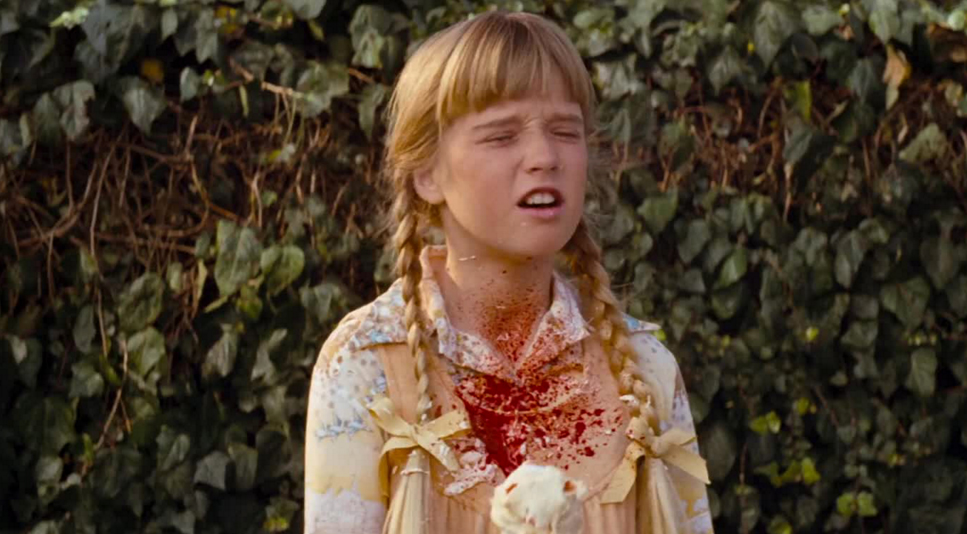
Most Carpenter moment? It’s not often that you watch a scene and think ‘there’s no way you’d get away with that now’ but the key scene in this film is just that. Our gang members begin to circle an ice cream van driver, clearly nervous that he’s being targeted for reasons unknown. Distracted by a little girl buying an ice cream, they grab and terrorise him, knocking him to the ground and killing him…but not before shooting the little girl in cold blood who’d come back to exchange her ice cream. As shocking now as it must have been in the 70s, after being confronted by a scene like that, you firmly believe that anything can happen and keeps you on your toes right until the end.


They Live (1988) – click here for full review


Based on Ray Nelson’s 1963 short story ‘8 o’clock in the Morning’ this is an incredibly clever, political satire and represents allegorical sci-fi at its best. If you haven’t seen the film then skip to the next film as there will be spoilers!

Central to the plot is the idea that aliens are among us and hiding in plain sight, occupying positions of power and influence. A drifter, wonderfully played by the late Roddy Piper, stumbles across the secret after unwittingly falling in with a small band of freedom fighters, roping in the reluctant Keith David. Carpenter manages to say a lot about society and how the working classes are kept down and oppressed by an elite who control the media through big business, politics and the uneven distribution of wealth. Whereas ‘The Thing’ was a visceral film all about claustrophobic paranoia, ‘They Live’ is a considered comment about the widespread takeover and manipulation of American society.

Carpenter’s films are renowned for their tension and economy of action but as his films progressed we began to see more humour coming on. ‘Big Trouble in Little China’ was something of a watershed film for Carpenter where we really saw more personality come through that had been hinted at in ‘Escape From New York’. ‘They Live’ gave him the opportunity to add substance to that humour for what would ultimately prove to be his last classic film. Another great score that complements Piper’s character as a drifter and one of THE great lines in cinema history, altogether now… “I’ve come here to chew bubblegum and kick ass…and I’m all out of bubblegum!”

Most ‘Carpenter’ Moment? That wonderful fight scene between Piper and David is pure gold. We know that David’s character Frank represents Piper’s last chance to show the world what’s going on so the tension is there…we want him to win the fight and know what’s at stake. But for Frank it’s a matter of principle and on the face of it we’re watching two grown men fight over a pair of sunglasses! As funny as it is tense, apparently at one point the two men were genuinely fighting which is believable as the fight takes up just under six minutes of screen time. It has a great pay off with Frank and Nada checking into a hotel room, bruised, battered with their eyes well and truly open and seriously pissed off!


The Fog (1980) – click here for full review


Carpenter’s follow up to the juggernaut that was ‘Halloween’ is a highly effective and old fashioned ghost story. It’s the kind of tale that could be told around a camp fire and Carpenter knows this, he re-shot around a third of the film, the opening scene featuring John Houseman telling children the story that would pretty much sum up the plot of ‘The Fog’ around a camp fire being one of them. It shares many similarities with ‘Halloween’; it’s low budget, it favours tension over gore, the threat is ever present but rarely seen and it features a wonderful central performance from Jamie Lee Curtis, alongside her mother Janet Leigh. Whereas there is mystery behind the motive of Myers, here we know exactly what the ghosts want but having them manifest themselves from the mysteries of the deep is what gives it that otherworldly quality.

Perhaps it’s because Carpenter was on a hiding to nothing with critics following what he did with ‘Halloween’ but, despite being a commercial success ($22million on a $1million budget) critics weren’t too kind, even Carpenter wasn’t satisfied and his displeasure with the final film was one of the reasons he agreed for it to be remade. I’ve always loved ‘The Fog’ and regard it as one of his best. It’s lean, creepy, eerie, oozing a small town urban legend vibe and utterly enthralling. The fact that the remake is so completely inept just shows what a master craftsman Carpenter is…and another pitch perfect soundtrack.

Most ‘Carpenter’ moment? An almost unbearably tense scene where radio DJ Stevie can see the fog heading towards her house where her son is being looked after by Mrs Kobritz. She sends panicked messages over the airwaves for someone to save him but can Nick and Elizabeth get there in time. All the elements are there…time is a factor, a young boy on his own in peril, the ancient mariners taking their time to break through Andy’s door and then, or course, the car gets stuck in mud just when you think they’ve made it. Carpenter’s eye for the dramatic, clever editing and incredible synthesised score come together like the ingredients of an Ice Cream Sundae to give leave us breathless and anxious for more!


What now?


Well, what are your favourites? I’m aware I’ve missed out some biggies…you might ask “What about ‘Big Trouble in Little China’, ‘Escape from New York’ or ‘Christine’?” You might want to know if I forgot ‘Prince of Darkness’, ‘Dark Star’ or ‘Starman’. You might have included ‘Ghosts of Mars’, ‘Memoirs of an Invisible Man’ or ‘Elvis’ but you’d have been wrong!

So, what films would you pick as Carpenter’s ‘Five of the Best’…I want to hear your views!

Thursday, 24 August 2017

The Legend of Boggy Creek (1972)

Tagline: “The true story of ‘The Fouke Monster’”
Duration: 85 minutes

Film Quality: 2/5
Gore Content: 0/5
Entertainment Value:3.5/5
Originality: 4/5


Introduction


Back in the early 70s, as drive in horror movies were somewhere approaching their peak, American theatres were always on the lookout for something different. In the land of opportunity, and perhaps sensing that there was a profit to be made with a small amount of money and lot of drive, one Charles B Pierce borrowed $100,000 to make a quasi-documentary about a bigfoot type creature terrorising a small Arkansas town. Using locals and students instead of actors the result is a terrible movie that has some kind of strange hold over people of a certain age who saw it at a certain time in their lives, like a piece of celluloid shrapnel lodged in our combined movie consciousness!


In a nutshell


The narrator of a ‘docudrama’ returns to his home town where he reminisces about his close encounter with ‘The Fouke Monster’, a Bigfoot type creature that legend had it roamed the nearby ‘Boggy Creek’. His narration then takes us on a journey to recount some of the significant events in the legend’s history and asks us to make up our own minds about the existence of the beast.


So what’s good about it?


Here is a film that relies almost entirely on the time and place that it was created and consumed. Back in the very early 80s, BBC2 screened this film at tea time, which meant that a number of youngsters, me included, were exposed to our first encounter with a monster movie. It didn’t matter that the film is blatantly fiction, at the age of 4 you believed what you saw on TV and very easily frightened by something that appeared different. The voiceover and documentary feel made it look more like the News rather than a film and that WAS real! Parents had no way of knowing what the content of this film would be…it was on early, there were only three TV channels at the time and there was no Internet. I was scared, had no idea why I quite enjoyed it and that conflict of hitherto unknown emotions left its mark.

This is where nostalgia plays strange games with you. I finally got to see this film again some 37 years later and it’s incredible how much of this I both remembered and misremembered. A song that I had attached to the film wasn’t in it, but there are songs which meant my memories had shifted meaning from this unfamiliar film onto something more familiar. There was one single line and scene that genuinely frightened me…a cat dies following an encounter with the monster and the narrator says “There was not a mark on it, it was literally scared to death”. I’m not sure that I knew it was a ‘documentary’ or if I’d discovered that by looking it up when the Internet came along but again, this stuck in my mind. I can now see it for what it is, a crude if honest and interesting docudrama that I clearly believed during my early years when the concept of things being made up but made to look real was alien to me.

There is a certain eeriness about the film!
Going onto the film itself, for today’s audiences it would be largely forgettable but it does have a certain something. The narrator’s dry, almost dull, monotone voice is oddly detached from the onscreen proceedings, despite apparently being made by someone personally affected by the monster. The film itself oozes nostalgia and the opening few scenes, perhaps three minutes of seemingly innocuous shots of wildlife are suddenly shattered by the eerie cries of the monster which causes them to flee and behave erratically. It certainly adds to any effect of authenticity which is soon destroyed by the human cast which is as wooden as the forests that surround Fouke.

We’re treated to some re-enactments of Fouke Monster encounters which range from quite well done to bloody awful, perhaps outstaying its welcome to a certain extent, but it surprisingly holds your interest first time around. That said, it’s clear whilst watching that there is a certain amount of padding, as if they had a good 55 minutes of footage with no idea about where to get the other 30! Again, you’re under no illusions that what you’re seeing is real but you can’t escape the notion that this is a story that, though clearly based on legend and hearsay, is one familiar to a number of those who lived in small towns and watched it on the drive in circuit. The Fouke Monster may be one of many unassuming legends, but the story is very real, alive and fully realised in every urban legend from every small town.


What about the bad?


Dear oh dear, the film really doesn’t stand up well to technical scrutiny. The acting is the kind you would expect if you asked the local residents of a small town to ‘act natural’ and play themselves whilst feeding them dialogue. The lights are on but nobody’s home! It’s as slow and meandering as the Creek from which it’s named and there is no real attempt to offer any explanation or even real evidence of its existence beyond staged re-enactments and passed on stories. It offers no resolution other than a ‘it may still be out there or it may not’ monologue which makes for a somewhat empty feeling as the end credits roll.

It does labour the point in terms of its reconstructions to the extent that they become a bit boring, however it is broken up around the half hour mark with not one but two, very odd and horrendously misjudged musical numbers! First up is a bizarre folk song that posits the theory that the monster is lonely and just needs a cuddle. It is cringe worthy to the say the least with lines such as ‘Perhaps he dimly wonders why, there is no other such as I, to touch, to love before I die, to listen to my lonely cry’…perhaps he’s waiting for The Hendersons!!!. Thankfully it’s a brief interlude until they unexpectedly crowbar in a second folk song a few minutes later that manages to be even worse!!! Called ‘Nobody Sees the Flowers but Me’, the song appears to have no significant purpose other than to introduce us to a young boy by the name of Travis Crabtree! His sole purpose in life is to ramble through the woods on his own with a gun, delivering food and supplies to an old hermit called ‘Herb’ who shot off most of his foot in a tragic boating accident!!!

Thankfully, before it veers too far off into unintentional comedy territory it does take a long hard look at itself in the mirror to give us a few good scares in the final half hour with some fairly dark and creepy moments of the monster terrorising a family at night.


Any themes?


It’s first and foremost an exploration of childhood fears and the deep rooted nature of local legends. I still remember being afraid of passing a certain pub in the small town where I grew up, I still have no idea why but even now the building creeps me out. I don’t know if it was the name of it, the motif on the sign hanging on the wall, if I was told off whilst outside, if I woke up from a nightmare whilst passing it…all I know is that I associated it with fear and that’s what this film is about. The narrator heard an animal noise and, because of the stories of monsters and the legend within the small town, that was the most logical explanation of its source.


Release History


No censorship issues, in fact the main issue for the past 40 years seems to be getting to see it at all! In the UK at least there has been no worthwhile release. It was available on VHS, bootleg or substandard DVD releases have hit the market and occasionally do the rounds on auction sites but the best way to get hold of it, in the UK at least, is on demand where it has decent but not great, pan and scanned picture quality, at least on the version I saw on Amazon.


Cultural Impact


Fake documentaries and found footage movies are ten a penny at the moment and have been for years. You can thank ‘The Blair Witch Project’ for that! There’s an argument to be had that ‘Boggy Creek’ was where it all started and, though not exactly a runaway hit that year, it has gone on to gross some $20m which some lists claim puts it in the top ten highest grossing films of that year!!!
Let’s not also forget that this is based on a real legend. There are countless Pinterest, social media sites and websites dedicated to the Fouke Monster as well as a number of piss-poor sequels or tie-ins (the most recent being ‘Boggy Creek Monster’ from 2016) which make the original look better with every viewing. It still has a cult following, largely from those who, like me, saw it as an impressionable child and it stuck with us, just like the shrill cry of the Fouke Monster stuck with the fictional documentary maker within the film.


Final thoughts


Let’s be brutally honest, this is not a ‘good’ film! Yes, it has a few effective scenes but nobody could possibly argue otherwise, however it holds a special place in my cinematic heart as my very first encounter with a low budget horror flick. You can pick holes in the acting (it’s impossible to do the opposite!), laugh at the folk songs and pour scorn on the production values but there’s something about it I can’t shake off. It doesn’t hold up to repeated viewing but I know I’ll return to it again. However, I fear that it must be watched with a heavy dose of nostalgia!


You’ll like this if you enjoyed…


‘The Blair Witch Project’, ‘The Last Broadcast’, any ‘Bigfoot’ film

Monday, 14 August 2017

The House by the Cemetery (1981)

Tagline: “Can anyone survive the demented, marauding zombies in…”
Duration: 86 minutes

Film Quality: 4/5
Gore Content: 4.5/5
Entertainment Value:4/5
Originality: 4/5


Introduction


Following ‘Zombie Flesh Eaters’, ‘City of the Living Dead’ and ‘The Beyond’, Lucio Fulci was developing a bit of a reputation amongst gorehounds. Whether or not this sat well with the Italian director, who had carved out a decent career in the giallo and western genres, was another matter but it was clear that fans were screaming for more. Just five months after ‘The Beyond’ he brought out the film that would end what became known as ‘The Gates of Hell’ trilogy (one of the quickest trilogies ever released…just 15 months separated this from ‘City’) that combined the unusual approach to space and time he gave to ‘The Beyond’ with the Lovecraftian atmosphere of ‘City’.


In a nutshell


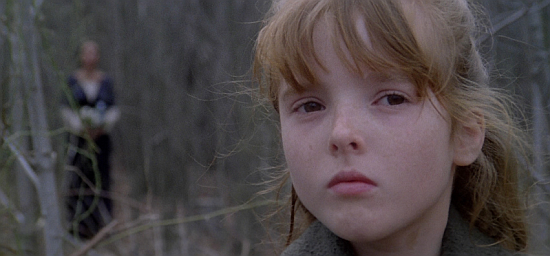
Dr Norman Boyle moves his family to a house in New Whitby to pick up on the research of a former colleague who murdered his mistress before killing himself. His son, Bob, begins to pick up on warnings from a mysterious little girl called Mae that he should not stay at the house. Meanwhile a series of murders and disappearances suggest a monstrous presence in their basement…who is Dr Freudstein and just what is he doing behind that locked door?


So what’s good about it?


From the opening scene to the final moments there is an eerie, otherworldly atmosphere that is brought to the fore expertly by Walter Rizatti’s superb score. His main theme that plays over the opening titles wouldn’t sound out of place in a documentary about old, haunted churches and immediately lets us know that what we have here is not a zombie film but something more akin to a haunted house movie. The rest of the score features understated guitars, sinister chords and manipulated, distorted sounds designed to disorientate and confuse; we can’t really tell where the threat might be coming from…is it the little girl, the babysitter, something more sinister that may or not be supernatural?

De Rossi’s effects are once again excellent and VERY gory. In ‘The Beyond’ his effects were very much a mix of the sudden and brief, I’m thinking of the skewered eyeball, the hole in the head, short but sweet alongside the ‘watch this’ long and lingering shots! ‘The Beyond’ starts with a very long scene of a warlock crucified and melted with acid, here it opens with a very short and sudden shot of a woman attacked with a knife that enters the back of her head and comes out of her mouth. It’s an odd beginning as, although this is a very gory film, the emphasis is on tension and atmosphere but here it’s almost as if we join the scene halfway through! We’re treated to some seriously nasty stuff, most notably the poker attack on the estate agent which is genuinely shocking.

This is probably the most serious of the trilogy and has further literary influences. Whereas ‘City’ and ‘The Beyond’ were very Lovecraftian in their exectution, despite similar flourishes this one has more in common with Henry James, in particular ‘The Turn of the Screw’ in the way that it approaches the movie in the manner of a haunted house film. Fulci included a quote, allegedly from James, “No one will ever know whether the children are monsters or the monsters are children, or at least that’s what it says at the end of the film with the quote being made up by Fulci. The ending does recall ‘The Turn of the Screw’ which sees the story’s ghost disappear with the death of the child…here the child disappears with the possible death of the ghost, Mae.

It’s a very strange film in tone and execution and may appear that it doesn’t know what it wants to be. Is it a gory fright flick or a frightening gore movie? I really did enjoy it but it’s hard to pinpoint precisely why. It seems at times to be a bit of a scattergun of random unrelated scenes and characters who at times seem to know each other very well and then act like complete strangers. This does continue a theme of Fulci’s trilogy playing with cause and effect, perhaps it doesn’t work quite so well here because it’s on a smaller scale with fewer characters and played a little more straight. Either way, like a Knickerbocker Glory or an Eton Mess, it works despite itself and rounds off the trilogy on a high.


That voice really irritated Dr Freudstein!
What about the bad?


I’m not sure how it comes across in its original Italian dialogue (I really must watch it in Italian with English subs) but the dubbing of Bob is annoying, bordering on a deal breaker for the entire film! I can’t work out if it’s a man trying to be a boy, a very young boy with the sound slowed down to make him sound a little older, I really don’t know. It sounds like some of those old Japanese cartoons redubbed for the English market like ‘The Mysterious Cities of Gold’ but without the humourous visuals. The rest of the dubbing is pretty good, they even dub Bob’s screams!!!

Dario Argento has always faced the ‘misogyny’ charge and I think it’s worth saying here that the female characters in ‘House’ get a very raw deal. I think only two male characters bite the bullet and none of them are terrorised to the extent of the women. The boyfriend in the opening scene is killed before the film starts and only briefly shown whilst Norman has his throat ripped out after a half-hearted attempt to stop Freudstein. Our ladies though are dealt with much more harshly! Decapitated, poked full of holes, stabbed through the back of the head and dragged violently down the stairs before having her head crushed against the concrete floor. I’m not saying that Fulci is a misogynist but if that kind of criticism can be levelled at Argento then this film is guilty of the same trick.


Any themes?


Could all of this be a projection of Bob’s nightmarish fears? That final, fabricated Henry James quote “No one will ever know whether the children are monsters or the monsters are children” does rather suggest that the children are the supernatural force. Certainly Mae is not ‘human’ in the sense of being alive, only Bob can see her, even in the window in the painting, and Bob is the only character who enters the titular house and survives the film’s running time. Is Freudstein a manifestation of his fears and desires to punish his parents for moving him halfway across the country and the only friend he can find is a ghost? He is there to see the mannequin fall through the shop window and decapitate itself in a morbid example of foreshadowing from Fulci.

You also have Dr Freudstein’s cries which sound more childlike than adult. Is Freudstein himself now a monstrous child, unable to die but also unable to live and reverting back to his childlike, almost feral bass instincts to consume and survive with little regard for the provision of adults?

The fact that Bob is dragged back into the house’s past keeps up the theme of the trilogy where places and time have no respect for cause and effect. Mae comes to the present to warn Bob who is taken back to her present in order to survive. Is Bob is also a ghost whose presence in the house has brought Mae back from the grave to secure her family’s future? If that’s the case then the Freudstein family and its legacy is completely reliant on two ’monstrous’ children.


Release History


Fulci’s film was given an absolute pounding by the BBFC. The original cinema run in the UK was missing nearly a minute and half of gore, mostly from the very gory murder of the estate agent and the decapitation of Ann, and it was this version that was released on VHS by Vampix in 1983 and promptly banned. Elephant Video picked it up in 1988 but really needn’t have bothered, butchering it in a manner that would have made de Rossi weep in his sleep with a total of 5m37s missing. The whole of the poker murder was missing, and the subsequent dragging away of the body, the opening murder, the unconvincing killing of a bat, the famous shot of the disembowelled man (who was he anyway?) in the cellar and pretty much anything that was red!

When VIPCO got their grubby little hands on it in 1993 they put out a version that was pre-cut and missing a whopping 6m19s. It is possible that this was done to make those original cuts less jarring but even though, there was no attempt seemingly made to release a more complete version which again begs the question…why bother? VIPCO did redeem themselves slightly in 2001 when they put out a DVD missing just 33 seconds (part of the poker death and throat slicing) to take into account the recent prosecutions (ridiculous law!!!) Arrow finally released an uncut version in the UK in 2012.

Hats off to the US though…apparently one of the original prints was shown out of sequence so that two reels didn’t play in order. It made the sometimes tricky cause and effect elements of the film and characterisation even more difficult to follow. Some characters they’d just seen killed are walking around right as rain later on but, being a Fulci film, some didn’t question it and passed it off as a quirk of the trilogy!


Cultural Impact


Concluded the unofficial ‘Gate of Hell’ trilogy. Fulci has always been unfairly compared to Dario Argento and this could be seen as Fulci’s answer to his countryman’s ‘Three Mothers’ trilogy. Taken film by film I don’t think there’s much argument that ‘Suspiria’ and ‘Inferno’ are superior films but as a trilogy, ‘The Third Mother’ lets Argento’s trilogy down. This may be controversial to some (I’m more of an Argento fan myself) but you could argue that Fulci’s trilogy is the more complete and ultimately satisfying when viewed as a ‘trilogy’. Three very good and individual films, linked by theme whist not by character.


Final thoughts


Often overlooked in favour of ‘Zombie Flesh Eaters’ or ‘The Beyond’, I have a real affection for ‘House by the Cemetery’. It has lots of atmosphere, plenty of gruesome special effects and a stunningly eerie soundtrack. It’s also the most frightening of the ‘Gates’ trilogy, placing a very young (albeit annoying, even more annoying than your own) child right at the centre of the gory mayhem. A minor classic from Fulci.


You’ll like this if you enjoyed…


‘Inferno’, ‘City of the Living Dead’, ‘The Beyond’, ‘The Innocents’


Related reviews


Zombie Flesh Eaters - click here
The Beyond - click here


Monday, 31 July 2017

The Lost Boys (1987)

Tagline: ‘Sleep all day. Party all night. Never grow old. Never die. It’s fun to be a vampire’
UK Running Time: 97 Minutes
Film Quality: 4.5/5
Gore Content: 2/5
Entertainment Value: 5/5
Originality: 3.5/5


Introduction


Until the 1980s vampires had largely been monsters from a bygone age, Dracula or Nosferatu types, walking about in creaky old castles and springing out of coffins just as the rest of us are settling down for our cocoa and biscuits. Hammer did a little more to make them sexy in the swinging 60s and whatever the hell the 70s was, so it was a logical jump that the stylised 80s would discard them like an old sock unless they could somehow make them cool. David Bowie managed it to a certain extent in the slightly weird ‘The Hunger’, and ‘Fright Night’ made an admirable effort despite our ‘cool’ vampire spending most of the film wearing a jumper, it wasn’t until 1987 when Joel Schumacher absolutely nailed it with ‘The Lost Boys’.


In a nutshell


When Lucy ups sticks with her two teenage boys, Michael and Sam, to live with her Dad after a divorce they have no idea that they’re moving to the self-proclaimed ‘Murder Capital of the World’! That could be down to some bad elements, or it could be that it’s crawling with vampires eager to get their daily dose of rouge. Let’s just hope that Michael and Sam can stay out of trouble…


What’s good about it?


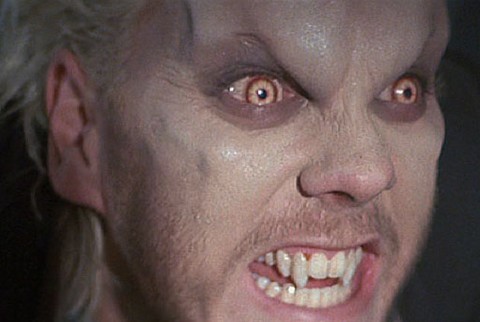
If they were aiming to make vampires cool then they succeeded (left). Schumacher crowbars in enough cool to fill two entire features with enough left over to put in the freezer and defrost in 1990 to turn into ‘Flatliners’. It’s dripping with style, quotable dialogue, an incredible soundtrack and characters that you would give your left stone to have been in real life. It captures the 80s as well as any John Hughes movie with its teenage angst, terrible fashions and ability to make situations relatable to us despite its subject matter.

It has a cast to die for, one of the best of any 80s movies regardless of genre with the pick of the bunch undoubtedly Kiefer Sutherland. It wasn’t his first feature, we’d seen him as the leader of a bad bunch before in ‘Stand By Me’ but he’s a revelation in this film. He oozes charm and a threatening calm, like a cult leader which I suppose he is. The way he encourages Michael to drink the blood is brilliant, using his vampiric powers of suggestion and illusion to make him do it willingly rather than by force, a scene which sums up his character wonderfully. We also have The Two Coreys on screen together for the first time, a great turn by the late Barnard Hughes as ‘Gramps’ and Jami Gertz playing the vulnerable yet seductive Star, a character originally written as male.

We’re not talking about a hardcore horror film here but there are some great little set piece vignettes towards the end including the infamous ‘Death by Stereo’ scene, the holy water bath and the battle between Michael and David. There are some nice special effects going on here and a surprising exploding head that, whilst not in the same league as ‘Scanners’ or ‘Dawn of the Dead’ is a welcome addition to a 15 rated horror movie! There’s also the brilliant vampires vs Surf Nazis scuffle which is less a battle than a massacre and shot with a scattergun approach that befits the MTV generation style of much of the film.

Having said that, what Schumacher brings to the film is a great sense of dark style and artistic brilliance. I love the shot of the wave crashing in front of the giant Blood Moon, the lighthouse beam shooting up over the top of the cliff face from below as the bikers speed towards the edge and the reverse shot out of the cave as the vampires prepare to go on another killing spree. It’s a very well made film with the art direction bringing a lot of the 80s excess, fashions and sensibilities into the context of a horror film without making it look too much like a movie for teenyboppers. In fact it’s one of those crossover films that’s managed to appeal to teens and genre fans alike.


What about the bad?


Well, it’s not very scary is it and you could accuse the film of adopting a style over substance attitude. At the end of the day this is a teen horror film where most of the central characters, at least the ones we’re invited to identify with are teenagers who have teenage problems that adults can’t solve. The issue of a lack of scares doesn’t bother me too much as it’s so bloody entertaining but it was one of the films to usher in a brand of horror designed to appeal to a younger audience which ultimately brought us ‘Twilight’ and I’m not sure I can forgive that!

With so much time and effort invested in the teenage characters, very little colour is given to the adults, with the exception of ‘Grandpa’. Lucy is incredibly dull, which is possibly the point as she is such an easy target for Max…watching it back you can see his grin when he first sets eyes on her (left), mistaken for an admiration of kindness on first viewing but takes on different connotations second time around.

Not enough is made of the vampires for me with no context as to why they’re in Santa Carla, who they are and vampire lore is played with to come extent. How are the vampires able to enter the building in the climax when they haven’t been invited? Why does garlic not work? Does nobody think of making a cross? And why do we not see Star change into a vampire? She is the only female member of the vampire gang and my own curiosity would have liked to have seen her ‘vamp out’!


Any themes?


The title is clearly a reference to Peter Pan. I like the idea that somebody has taken a look at Peter Pan’s character and realised that he comes out at night, never gets old, he can fly…what if he were a vampire? It’s a brilliant concept and the idea of living forever coming at a price which ultimately results in a complete lack of humanity (how do we know that David wasn’t like Michael and Star once, afraid and fighting the ‘turn’?) due to having to ‘feed’.

‘Youth is wasted on the young’ is a popular saying but you can never truly stay eternally young because life’s experiences are what make you ‘old’. David and his gang may have been seduced by the thought of eternal youth but they are outcasts. They can never be free from the shackles of what they are and what they’ve done so, like Peter Pan, the boys who never grew up can never enjoy their eternal youth but feed off the youth of others.


Release History


Nice and straightforward with no censorship issues it was a modest box office success but really took off on home video with plenty of VHS, DVD and Blu-ray releases brimming with special features.


Cultural Impact


It’s become a monster of a cult hit, Quentin Tarantino even name checked it in his blistering debut ‘Reservoir Dogs’. It paved the way for vampires to be cool and was directly responsible (for better or for worse) for teenage hits ‘Buffy The Vampire Slayer’, ‘Angel’ and subsequently ‘The Vampire Diaries’ and the absolutely terrible ‘Twilight’ films. It always bothers me when people try and compare ‘The Lost Boys’ with ‘Twilight’. It’s like comparing the highest quality Belgian chocolate with a Twix, yes the ingredients are the same but one is mass produced for a quick snack and the other is for those who know the difference!


Final Thoughts


Not many films get that balance between mass appeal and cult phenomena and it’s almost always an accident but ‘The Lost Boys’ gets so much right that it deserves its place for both sets of fans. It’s effortlessly cool, despite being of its time, with enough nods to both the horror and teenage comedy genres that it works perfectly on both levels. It’s one of those films that you accidentally switch on to when you’re ready for bed, doing a bit of channel hopping, intending to watch another five minutes but end up watching the whole thing. Joel Schumacher, I salute you sir!


Memorable quotes


Grandpa: “One of the things about Santa I just couldn’t stomach……..all the damn vampires!”

David: “They’re only noodles Michael.”

Edgar: “Just scoping your civilian Wardrobe.”
Sam: “Pretty cool huh.”
Alan: “For a fashion victim.”

Grandpa: “Let me put it this way…if all the corpses buried around here were all to stand up at once, well, we’d have one hell of a population problem.”

Edgar: “It’s not our fault, they pulled a mind scrambler on us…they opened their eyes and talked.”

Sam: “Death by stereo!”


You’ll like this if you enjoyed…


“Fright Night’, ‘Near Dark’, ‘An American Werewolf in London’, ‘Tremors’

Tuesday, 25 July 2017

The DPP 39: Video Nasties List - Part 7

In 1984, the Video Recordings Act ushered in a terrifying new era in UK home video entertainment. The regulation and subsequent censorship of home videos by the British Board of Film Classification led to a number of films being seized by the authorities and prosecuted under the Obscene Publications Act 1959. In total, 39 of these films were successfully prosecuted, over the coming months The Horror Video will look very briefly at the release history of each film and its current status. To view the rest of the series…

Part 1: ‘Absurd’, ‘Anthropophagus’ and ‘Axe’, click here
Part 2: ‘Bay of Blood’, ‘The Beast in Heat’ and ‘Blood Feast’, click here
Part 3: ‘Blood Rites’, ‘Bloody Moon’ and ‘The Burning’, click here
Part 4: ‘Cannibal Apocalypse’, ‘Cannibal Ferox’ and ‘Cannibal Holocaust’, click here
Part 5: ‘The Cannibal Man’, ‘The Devil Hunter’ and ‘Don’t Go in the Woods’ click here
Part 6: ‘The Driller Killer’, ‘Evilspeak’ and ‘Expose’. Click here


Title: ‘Faces of Death’ (1978)

Director: Conan Le Cilaire (John Alan Schwartz)
Uncut running time: 104 minutes
Alternative titles: ‘The Original Faces of Death’

In the 70s a very strange and macabre sub-genre emerged known as ‘Mondo Movies’. These were documentaries that claimed to show genuine footage of death, accidents, animal attacks and bizarre sacrificial ceremonies. ‘Faces of Death’ was one of these and has such a reputation that many horror fans avoid it out of principal. It claims to have been banned in 40 countries, knock the ‘0’ off and you have a more realistic figure and yes, the UK was one of those countries alongside Norway, Finland, Australia and New Zealand. Around a third of the movie is fake but there are some seriously nasty moments caught on film, most notably the aftermath of a road traffic accident between a truck and a cyclist and some pretty gnarly slaughterhouse footage.

It was something of a hit worldwide, taking $35million at the box office, not including VHS sales where it really coined it in! In the UK, the first version brought out by Atlantis Video Productions in September 1982 was cut by a massive 32m36s (almost a third of the film!!!) yet was STILL prosecuted and removed from the shelves in July 1983. It wasn’t re-released until 2003 when Screen Entertainment got it through the BBFC missing 2m19s of animal cruelty, namely dog fights and a monkey being beaten to death.

Current status: Available in the UK from Screen Entertainment cut by 2m19s, uncut in the US through Gorgon on blu-ray.


Title: ‘Fight for your Life’ (1977)

Director: Robert A Endelson
Uncut running time: 82 minutes
Alternative titles: ‘I Hate Your Guts’, ‘Held Hostage’, ‘Staying Alive’, ‘Getting Even’, ‘Bloodbath at 1313 Fury Drive’


Almost universally panned, this is a strange one in that it is the only film on the nasties list that was prosecuted due to language rather than violence. It plays out as a rape revenge movie but it’s the unbelievable level of racism that caused offence as three convicts attack, beat and generally violate an entire black family, forcing them to fight back. I don’t know if it was an attempt at a Blaxploitation movie that was horrendously misjudged or a deliberate attempt to offend but it really is bad on every conceivable level.

This fared terribly in the UK where it was refused a theatrical certificate in 1981 but, incredibly, it was available on VHS through Vision On who brought out an uncut version in 1982. It festered on the shelves until September 1984 before it was seized and prosecuted as obscene. It’s one of the more highly sought after VHS tapes because it has never received a release since and one of the few that is still banned in the UK. I’d be surprised if it ever saw the light of the day due to its reputation, I can’t see one of the more well-known labels risking their reputations on it.


Current status: Unavailable in the UK and still banned, uncut in the US on a region free DVD through Blue Underground.


Title: Flesh for Frankenstein (1973)

Director: Paul Morrissey
Uncut running time: 95 minutes
Alternative title: ‘Andy Warhol’s Young Frankenstein’, ‘The Devil and Dr. Frankenstein’, ‘The Frankenstein Experiment’, ‘Up Frankenstein’


Bordering on camp on occasion, this odd attempt at re-imagining the Frankenstein legend from Andy Warholl and Paul Morrissey caused a lot of controversy in its day. Another one that, strangely, got itself into trouble thanks to its dialogue although, in this case, it was a single line as our titular mad scientist proudly proclaims that “You don’t know life until you’ve f~@ked death in the gall bladder”! This gained the interest of the moral guardians within the UK sensationalist press and drew attention to its gruesome and, in many places, sexual violence. Overall a very well made and acted film, it really should have been left alone but that was a sign of the times.

It suffered greatly at the hands of the BBFC who removed 8 minutes from its initial cinema release. Video Gems pushed through an uncut VHS in 1981 which was still the only way to see an uncensored print after the BBFC again insisted on cuts totalling 2m08s for a 1982 cinema re-release. VIPCO failed to get an uncut VHS release through, instead falling back on the truncated cinema release, however it still fell foul of the authorities who prosecuted in March 1984. There it remained until First Independent brought a VHS out in 1996, however it was still missing 56 seconds, but these and all other cuts were finally waived in 2006 for Tartan’s DVD. It’s crying out for a good blu-ray release!


Current status: Unavailable in the UK due to the Tartan DVD being out of print, uncut on Image DVD in the US

Tuesday, 18 July 2017

Zombie Flesh Eaters (1979)

Tagline: ‘When the earth spits out the dead…They will return to tear the flesh of the living’
UK Running Time: 91 Minutes (Strong Uncut Version)

Film Quality: 4/5
Gore Content: 4/5
Entertainment Value: 4.5/5
Originality: 3/5


Introduction


Italian director Lucio Fulci had carved himself a solid if unspectacular career as a crime thriller director with some pretty decent, stylish ‘Giallo’ movies under his belt. He took on this project, cashing in on the success of George A. Romero’s seminal ‘Dawn of the Dead’, forever becoming known as ‘The Godfather of Gore’. A notorious, so-called video nasty it was a surprise global hit despite its grindhouse leanings and, though history has diminished its ability to shock in the same way, still stands up as an incredibly entertaining, gore-soaked rollercoaster of a horror film. This should be any self-respecting zombie fan’s introduction to the Italian zombie sub-genre.


In a nutshell


An abandoned ship drifts into New York harbour and, whilst salvaging the vessel, a harbour patrolman is attacked before his killer is quickly dispatched. The daughter of the ship’s owner and a journalist set off for the Caribbean island of Matul, where he was last seen, to discover what happened to him. They come across an island knee deep in voodoo, strange medical experiments and tales of the dead rising from the grave.


What’s good about it?


Let’s not beat about the bush, it’s the gore!

This film was banned in the UK for a good reason and that is thanks to Geanneto De Rossi’s very gooey effects and a steadfast refusal to turn the camera away from the splatter that matters. We’d seen many a gruesome death in ‘Dawn of the Dead’ but that was done in such a deliberately comic-book, swift and throwaway fashion that its effect was lessened. Fulci really goes for the jugular, quite literally in one particular case, lingering on some very gruesome images with relish. Whereas ‘Dawn’ sprayed the red stuff around quite frequently, suddenly and in all directions, Fulci’s flick goes for the set-piece approach, building up to a gory scene as the payoff. The famous eyeball piercing scene is the most notable, we know there’s a zombie in the house, we know this particular character’s going to die, the entire scene plays towards a climax that even now is tough to watch.

The first time I saw this film was in the early 90s when VIPCO released what it misleadingly called an ‘Uncut Cinema Version’…what it didn’t say was that the film was cut for cinema but despite watching a truncated cut of the film, I still enjoyed it. There is more to it than just arterial blood and flesh eating. I think what it has going for it that is only hinted at in ‘Dawn’ (I keep comparing the two because this film was marketed in the US as ‘Zombi 2’ therefore billing itself as a sequel to ‘Dawn’, initially known as ‘Zombie’ stateside) is that, at its heart it takes the zombie back to its Haitian roots. The original zombies, way back in the early 20th century, were created by voodoo, to which there is many a reference, and witch doctors which suggests that the dead’s uprising may be religious rather than scientific. It’s interesting that an Italian production decided to take this direction, no doubt filming locations were cheaper in the Caribbean but it does give the film an atmosphere and an unpredictability that I found intriguing.

You also have to take your hat off to Fulci as the pacing of the film is perfect. There’s enough early on to keep you interested and questions you want to know the answers to. It’s a good half an hour before they even get to Matul but it doesn’t lag. There’s a terrific score by Fabio Frizzi which includes incessant voodoo drums - there is an amusing moment when one of the characters remarks that those drums are driving her mad, that there is real voodoo going on here.

We’ve talked about the gore but a quick note on De Rossi’s make up effects as well. He really goes to town with some of these zombies. Whereas the undead in ‘Dawn’ are largely the recently deceased, we see some of these creature rise from their Conquistador graves. They have maggots where their eyes should be, they’ve decomposed, missing limbs, dressed in rags, they are pretty scary and uncanny so hats off to De Rossi for the convincing way these zombies are depicted.


What about the bad?


Well. As with many spaghetti horrors, this is blessed with the kind of dubbing that leaves actors mouths flapping about like a school of distressed salmon whilst the dialogue plays over the top. There’s no getting around the fact that it’s distracting and whilst some say it adds to the charm, I say it makes the film look unprofessional, cheap and nasty. It was common for Italian films to be shot without recording dialogue so that it could be easily dubbed and therefore more attractive to the overseas markets, but for me it stands out like a boil on the forehead.

This is very much a knock off affair thanks to the success of ‘Dawn’ and as such it is blatantly obvious that the opening few scenes and final shot, both in New York, are intended purely for the US audience. It didn’t really need either and does nothing to tie it to Romero’s flick. One other scene stands out and that is a shark attack, this time referencing the success of ‘Jaws’. To be fair this is such a bizarre and quite beautifully shot scene, and certainly the only zombie vs shark rumble that I can think of. It’s also there to ensure a little bit of nudity is crowbarred into the film.

The unintended by product of Fulci’s successful Romero rip-off is that it spawned a whole host of Italian Romero rip-offs that somehow managed to rip off Fulci’s flick (yes I’m talking to you ‘Zombie Holocaust’, ‘Zombie Creeping Flesh’, ‘Night of Terror’ and ‘Nightmare City’), none of which are a patch on this one. It’s harsh to criticise a film for inspiring pale imitations but there are so many, including four unofficial sequels!


Any themes?


I’ve already said that I admire the fact it goes back to the very birth of the zombie myth whilst bringing it up to date for the Romero generation. If this was the last zombie film ever made you could have few complaints about it coming full circle with the re-introduction of voodoo rituals bringing about the rising of the dead. ‘The Serpent and the Rainbow’ did an incredible job of telling that story a few years later but the zombie remains and, thanks to Monsieurs Raimi and Jackson, there was plenty of scope for the zombie to enter the world of comedy (something ‘Zombie Flesh Eaters 2’ managed completely by accident!).


Release History


In the UK this title has had an interesting history due to censorship. The BBFC had a big problem with ‘Zombie Flesh Eaters’, cutting one minute 46 seconds for its cinema release, including the climax of the eyeball splinter scene, all instances of flesh eating, the throat ripping and a few other minor moments – fourteen separate cuts in total.

The movie was then released uncut on video by VIPCO as a ‘Strong Uncut Version’ a year or so later, becoming one of the biggest selling videos that year. Unfortunately it fell foul of the video nasty moral panic, the cinema version was put out and this version, alongside its uncensored counterpart, was banned outright in 1984. It remained out of print until VIPCO re-released the Uncut Cinema Version (still missing nearly two minutes) in 1992 in both a pan and scan and widescreen version.

In 1999 VIPCO tried again and managed to get a more complete version out on DVD that they marketed as ‘The Extreme Version’ despite the fact an uncut version would most likely have been passed. The problem here was a ridiculous, draconian, possibly even mythical law that a film could not be released uncut if it had been subject to a successful prosecution within the last ten years! This meant the BBFC’s hands were tied due to their own ridiculous ideas of censorship. The eyeball climax and subsequent flesh eating were still missing. They finally passed it uncut in 2005 for Anchor Bay’s ‘Box of the Banned’ so it wasn’t until Arrow’s release in 2012 that you could buy the film uncut, on its own, but even then the steelbook and special edition dvds were accidentally missing six seconds of footage (not contentious, they just used the wrong print) so replacement discs had to be sent out.

Watching the film again it seems ridiculous that you couldn’t walk into a shop/order a copy online of this film until four years ago, a full 33 years after its initial release!


Cultural Impact


Well it kick started the Italian horror genre which, at the time, pretty much solely consisted of Dario Argento who was churning out bona fide classics of the calibre of ‘Deep Red’, ‘Suspiria’, ‘Inferno’ and ‘Four Flies on Grey Velvet’ all on his own…I’m sure he was glad of the company!

Depending on your point of view this series consists of five films due to the Italian title in America being ‘Zombi 2’. This means that what we know in the UK as ‘Zombie Flesh Eaters 2’ (also directed, incredibly badly, by Fulci) was called ‘Zombi 3’ in the US, ‘Zombie Flesh Eaters 3’ is called ‘Zombi 4’ and so on. This is further complicated in the US by the 90s re-releases of Joe D’Amato’s ‘Anthropophagous’ and its sequel, ‘Absurd’, which were titled ‘Zombi 6’ and ‘Zombi 7’! I prefer to think of ‘Zombie Flesh Eaters’ as a standalone film to prevent giving myself a headache.


Final Thoughts


The very best of the Italian zombie sub-genre and the only one to escape the ‘unintentionally funny’ tag, this has stood the test of time very well even if it’s capacity to shock has diminished. That said, there are still some hard to watch scenes and with Fulci keeping a tight grip on the pacing he creates a wonderfully unique atmosphere from a familiar plotline. He directed three more zombie movies (the jury’s out over how much of ‘Zombie Flesh Eaters 2’ he directed after abandoning the project) and whilst I think at least one of them is superior to this one, ‘Zombie Flesh Eaters’ is probably the purest in terms of the zombie mythology.

Memorable Quotes


Dr Menard: “I don’t believe in voodoo”
Lucas: “And Lucas not believe that the dead be dead.”

West: “Out there, they’re coming back to life…they’re everywhere.”

Radio Reporter: “ I’ve been informed that zombies have entered the building…..they’re outside the door…..they’re coming in…………aaaarrrrgggghhhh.”

You’ll like this if you enjoyed…


‘Dawn of the Dead’, ‘The Serpent and the Rainbow’, ‘Zombie Holocaust’, ‘City of the Living Dead’, ‘Zombie Creeping Flesh’.