Tuesday, 10 October 2017

Puppet Master (1989)


Tagline: “Evil comes in all sizes”
Duration: 90 minutes

Film Quality: 4/5
Gore Content: 3/5
Entertainment Value: 4.5/5
Originality: 3.5/5


Introduction


Fresh from the demise of his Empire Pictures film studio, horror auteur Charles Band turned his attention to new company Full Moon Pictures, looking to make and distribute low budget horror and sci-fi that had the appearance of bigger budget movies…kind of like a modern day Val Lewton! He needed something to launch his venture so sought inspiration from one of his previous glories, taking the general premise of ‘Dolls’ and giving it, if you’ll pardon the horrendously pretentious pun, a life of its’ own…sorry!


In a nutshell


Following the death of their colleague Neil Gallagher, four friends with psychic abilities believe that their perished pal discovered the secret of Andre Toulon’s experiments in reanimation. Curiosity gets the better of them as they go to Bodega Bay, the site of Toulon’s suicide more than five decades previous…but Galllagher has a few surprises from beyond the grave.


So what’s good about it?


The prologue is a popular method of setting up backstory but I’ve not seen many that are as effective and intriguing as this one. In terms of setting up a mythology it is nigh on perfect. We are introduced to Toulon, know that he has managed to bring life to inanimate objects and that dangerous men will kill for it. Expectations dictate that the puppets would likely be introduced later but no…we meet Shredder Khan before any human characters are introduced and see him moving of his own free will. There is also a glorious point of view shot of Blade running through the hotel, scaring guests. The whole thing raises so many questions. Who is Toulon? How has he given life to the puppets? Why has he done it? What do the Nazis want with him and how do they know about his secret? Why has he committed suicide?

This leads straight into the mythology that underpins the entire film. From the introduction, and the wonderful, albeit brief performance of William Hickey as Toulon, you get the sense that what we are seeing is just a snapshot within this particular universe. There is a massive backstory that we’ve not been given access to and I suppose this is why the series has endured. The aforementioned Shredder Khan is not seen again in the film, despite a huge amount of effort and craft going into its design. It really is a brilliant opening scene and gives the film gravitas, elevating it far above the usual low budget horror in terms of storytelling and plot.

The puppets themselves, created by David Allen’s production company, are works of art, each one uniquely memorable. Blade is the pick of the bunch, apparently modelled on Klaus Kinski who looks innocent and almost childlike in the early scene, becoming more like a film noir villain with his facial and fashioned contrast of white and black. Jester, as he should be, represents the mood of the puppets with his constantly changing facial expressions. Pinhead is clumsy and awkward looking, every bit the street brawler, Tunneler provides the obligatory gore with his drillbit head whilst Leach Woman gives one sex crazed psychic what he most desires and fears at the same time. They’re wonderfully realised and very well brought to life through stop motion effects…one scene showing Pinhead climbing out of a coffin took days to produce for what is a ten second clip. It’s lovingly rendered and the end result is a testament to their combined craft.

I have to admit that most of the acting left me a bit cold, other than Hickey, however I found Jimmy Skaggs (left) excellent as the mysterious Neil Gallagher. He has the look of a ventriloquist’s dummy at times, with his overly slicked back hair, almost painted on smile that he lets slip on occasion, masking his true evil intentions. It’s a very good, again albeit brief, physical performance and kudos to the make-up team for giving him that effect which for me is a part of the film which doesn’t get enough attention.

It is a very well-crafted film, given a great look by Lucio Fulci’s frequent cinematographer Sergio Salvati and brilliant, carnival-esque score from Charles Band’s brother Richard which comes across as both scary and playful…all the fun of the fair! It’s very competently directed by David Schmoeller, who also directed the mannequin-themed horror ‘Tourist Trap’…he’s clearly very much at home with automatons! I love the shot of Blade at the end of the hall bathed in shadow, similarly the shot of Tunneler in the doorway, highly effective use of light. It was released straight to video despite being shot on 35mm for a theatrical release as Charles Band felt it would make more money in the booming VHS market. A very shrewd man who clearly knew his audience.


What about the bad?


The film, effective thought it is, does contradict itself in parts. It’s quite clear that the puppets are there to serve their master (they are puppets after all), however they are clearly possessed of independent thought. When Gallagher turns on his own puppets and attacks the friends of those the puppets have already killed, they seem horrified and turn on their master. However, why do they attack the maid? What did she do and why didn’t their conscience prevent them from carrying that out?

Also, for a short film, it isn’t without its pacing issues and with a bit of ruthless editing it could have a beautifully fast paced 80 minutes…the same length of some of Band’s other films. This could have been the result of its initial ambitions at a cinema run, but having taken the decision to go straight to video, the VHS market could have benefitted from a leaner run time. It certainly didn’t harm ‘Trancers’ or ‘Troll’!


Any themes?


It’s effectively a film about the quest for immortality with echoes of ‘Pinocchio’. The villains of the piece aren’t really the puppets, like an army that does the killing, the order come from a higher authority…they ‘just’ carry out the bidding. Of course this doesn’t absolve them of blame but the villain of the piece is a normal man who has developed a God complex having discovered the secret of everlasting life.

It’s about control and a lack of control. Our psychics seem drawn to the Bodega Bay Hotel despite seemingly knowing that they’re heading to their deaths, all of them having premonitions of doom. If there really is such a thing as fate, and surely as a psychic you MUST believe in it otherwise how could you predict an unmapped future, then they have no control. This puts both the puppets and the psychics at the mercy of forces that they have no control over and both must assert control over their own existence and force that momentum onto Gallagher to break his immortality.


Release History


It’s not a film that’s been associated with censorship but such problems have plagued ‘Puppet Master’ in its early releases, more in the US than UK. The ‘uncut’ version was shorn of 3 seconds upon its initial release (a brief shot of forced nudity in the elevator dream sequence deemed ‘sexual violence) but all gore was left intact. This was the version released by Entertainment in Video in 1989.

However, the US censors really got their knickers in a twist with 1m35s cut, including Toulon’s gory suicide, a comical shot of two puppets watching a couple having sex (come on!!!), a couple of shots of Neil punching Alex (again, seriously!), plenty of the final puppet attack on Neil and one of Leech Woman’s special moves. This version was lazily used as the basis of subsequent UK DVD releases by Film 2000. Thankfully 88 Films did a tremendous job with a blu-ray and DVD release completely uncut and loaded with extras…however Razor got their first in 2010 in the US, so it all had a happy ending!


Cultural Impact


Well they’re still churning out the sequels with ‘Puppet Master: The Littlest Reich’, possibly a reboot to the chronology, slated for a 2018 release! Writers have really rung that back story dry throughout the sequels, which run into double figures and a crossover with ‘Demonic Toys’, some more successful than others and going backwards and forwards throughout the chronology. New puppets have been introduced, you’ve had ‘Retro’ puppet masters, back to Nazi Germany and, much like the ‘Friday the 13th’ series, a ‘Final Chapter’ midway through the series. But you can’t keep a good puppet down and Toulon’s creations have endured incredibly well.


Final thoughts


Benefitting from an incredible opening prologue that hints at a universe and mythology way beyond that which the film explores, that’s what has led to the legacy of this way above average low budget gem, or perhaps we should say ‘rough diamond’. There is a lot to admire in this Charles Band production with excellent writing, good special effects, superb cinematography and wonderfully realised puppets. Easily the best of the series, it was a shrewd move to release it straight to video where it absolutely found its audience and a place as a true b-movie classic has been assured.


Memorable quotes


Neil: “You’re the puppets, I’m the master.”

Alex: “A little life insurance from the White Witch.”

Dana: I’m not a cynic Frank…I like to think of myself as a nasty bitch.”


You’ll like this if you enjoyed…


‘Child’s Play’, ‘Dolly Dearest’, ‘Demonic Toys’, Killer Klowns from Outer Space.


Related posts


‘Trancers’ – Click here
‘Ghoulies’ – Click here

Thursday, 5 October 2017

Hardware (1990)

Tagline: “It reactivates, it exhilarates, it exterminates”
Duration: 94 minutes

Film Quality: 3.5/5
Gore Content: 3.5/5
Entertainment Value:4/5
Originality: 2/5


Introduction


When music video director Richard Stanley managed to get funding to adapt one of his own short films into a full blown feature, not many people took notice. Seemingly based on a 2000AD story called ‘SHOK!’ (certainly, that's what the courts found), and featuring a few ‘past their prime’ rock stars and barely recognisable bit part actors, it didn’t exactly spark a wave of expectation. However, word of mouth praise, a decent cinema run and a resurgence during a VHS release that was shrouded in controversy resulted in an unexpected cult hit that has been called everything from derivative and crass to original and brilliant.


In a nutshell


A drifter picks up some scrap metal which winds up in the hands of a reclusive sculptress who lives in a tower block and immediately uses it as the centrepiece of a new artistic endeavour. But when the parts begin to fuse themselves back together, her apartment becomes a battleground between man and machine…but who will be the winner?


So what’s good about it?


It is a triumph of style over content. The main criticism of the film is that it’s derivative but it comes across as a mosaic of clashing styles and a rehash of key cult movie plot points, almost post-modern. Stanley’s background in music videos is there for all to see as the film very much breaks down into over-stylised, five minute segments and quick fire editing that is an assault on the senses and exhilarating to watch. Just watch the death of Moses which is almost surreal in its drug induced depiction, slap bang in the middle of a whacking great action set piece – a clash of styles! What Stanley lacked in budget and backing, he makes up for in sheer enthusiasm and drive to turn in a film that is wholly professional looking and beautiful in its destructive vision.

Stanley bathes the entire film in a reddish orange glow, explained away as radiation tinged smog, and plunges us into a multicultural London where the dredges of society scavenge and live off each other. Deserts surround the city, you get the sense that the higher classes live elsewhere (although this is never shown) whilst the authorities close in on the lower classes and keep them in line through fear and poverty and is very reminiscent of ‘Blade Runner’ in this respect. It’s far from a fully realised universe but it has conviction and again, Stanley (who by his own admission says it’s one of the worst scripts he’s written) makes the most of the clunky screenplay with stunning visuals.

It has some excellent effects and is, at times, a very violent film that landed itself in a certain amount of trouble in some territories, most notably the US. The practical robot effects are also impressive, especially considering Stanley wanted to employ stop motion, eventually falling back on robotics to the film’s advantage. I’m sure that the fact that the film is dark and very claustrophobic in its setting (90 percent of the film takes place in Jill’s modest apartment) certainly work in the effects team’s favour by papering over the cracks and favouring the close up shot but, by and large, it’s all done very well. It’s a credit to the entire cast and crew that they were able to turn in a film this impressive looking for less than a million pounds!

Taking a leaf out of ‘Alien’ and ‘Terminator’ (two other films that it strikingly resembles), it has a very strong female lead. (spoiler alert) Despite Jill’s reclusive nature, she is incredibly resourceful and ultimately responsible for taking down the M.A.R.K. 13, as it turns out to be called, where all of the apparently stronger male characters who are responsible for bringing this danger into her life in the first place, fail.

A quick word about the soundtrack as well…it is seriously loud and perfectly in keeping with its cyberpunk tendencies! Any film that manages to include almost the entirety of Ministry’s ‘Stigmata’ is okay in my book and it also features key music by Motorhead and Iggy Pop…in fact Lemmy and Pop have minor roles as a cab driver and shock jock respectively.


What about the bad?


As mentioned above. It’s a triumph of style over substance and to say it is derivative of other work is putting it mildly. The film got itself into trouble for its comparison to 2000AD’s ‘SHOK!’ story, so much so that a lawsuit was filed and the producers had to give the writers of that particular story (Steve McManus and Kevin O’Neill) and publisher Fleetway Publications a credit in the film’s titles. There are clear nods to the work of Ridley Scott, James Cameron, Isaac Asimov, Harlan Ellison and Philip K.Dick as well as stylistic nods to Dario Argento, Richard Fleischer and David Cronenberg. The script is stripped to the bone with very little memorable dialogue, clearly a mannequin on which to display Stanley’s rich tapestry of visuals.


Any themes?


(Spoiler alert)The class system is very apparent through suggestion and the robot is central to this. Referred to as M.A.R.K. 13, one of the characters figures out that the robot is a form of population control that is to be administered in the form of human genocide…”No flesh shall be spared”. It is announced on the radio the morning after the film’s main event that the government has approved the M.A.R.K. 13 programme for mass production, indicating that events could have been some sort of elaborate test. Sci-fi has used this theme several times before and since, with technology bringing about genocide on the lower classes from authoritarian regimes. This makes it an ultimately cautionary tale about what can happen when technology gets out of control in the wrong hands when weighed up against the value of human life.


Release History


It had a hard time on release, particularly in the United States and Australia where it was heavily cut to receive an ‘M’ and ‘R’ rating respectively. Much of the gore, particularly the extremely graphic doorway decapitation and the death of Moses which features explicit close ups of chainsaw eviscerations were drastically shortened. There was also a minor scene cut from the theatrical version for most VHS releases, an hallucination experience by Mo during his psychedelic death scene that features him reading from the bible whilst a veil is drawn over him.

It was a long time before it received a DVD release due to issues over who owned the rights which meant that we had to wait until 2009 for a special edition to come out. UK audiences came out pretty well from the VHS era for a change…we got an uncut version from the very start which was released in a widescreen print without fanfare, even on budget label 4-Front.


Cultural Impact


Unfortunately, it’s a case of what could have been. Richard Stanley clearly demonstrated that he had considerable talent and followed up ‘Hardware’ with an astounding mystical horror road movie, ‘Dust Devil’. The film was completely ruined by studios who butchered it, Stanley claiming that there’s a version out there that runs just 67 minutes, compared to the director’s cut which runs 105 minutes (there’s also a version with no post production, in other words it was released unfinished which ran 120 minutes). The DC contained huge amounts of back story and mysticism that US audiences didn’t get to see, resulting in a confusing mess of a movie that tanked.

He then got a shot at a big budget with ‘The Island of Dr Moreau’, during which producers were dissatisfied at the direction the film was taking and the quality of the dailies, firing him just days into production. The film was troubled from the start with personal issues for actors (particularly Val Kilmer according to reports), studio interference and all manner of disputes. It’s heart breaking to know that Stanley had spent years developing this only for it to fall apart in a matter of days for reasons almost totally beyond his control. He later appeared to suffer some kind of breakdown, never directing another feature film. A real shame for such a promising talent to have the enthusiasm clearly displayed in his first two films beaten out of him.


Final thoughts


What it lacks in originality it more than makes up for in individual talent thanks to the sheer bloody mindedness of Stanley’s insular vision and outward talent. A cult classic and one of the few films genuinely deserving of the term ‘cyperpunk’ (or even splatterpunk!) it’s a highly imaginative merging of ideas and styles that, whilst dated by a moment in time and indebted to other, superior films, is still more than satisfying to watch.


Memorable Quotes


Shades (as the robot plummets out of a window): “I hope it didn’t hit anyone.”

Lincoln: “Oh we all walk, the wibberly-wobberly walk.”

Angry Bob “And the good news is…there is no f@cking good news!”

Jill: “This your population control.”


You’ll like this if you enjoyed…


‘The Terminator’, ‘Soylent Green’, ‘Westworld’, ‘Saturn 3’

Thursday, 21 September 2017

Five of the Best...John Carpenter Films

The name John Carpenter will always be synonymous with slasher films (despite only really making one!) thanks to his ground breaking and game changing ‘Halloween’ but his work goes FAR beyond that. Crossing genres with sci-fi, comedy, romance and fantasy, he must surely go down as one of the greats of American cinema and also one of the country’s most under-appreciated. Capable of working wonders with a low budget, choosing a favourite Carpenter film is like being asked which is your favourite child…it depends on your mood and how you feel when you’re asked.

I’m attempting to choose ‘Five of the Best’ which is not as easy as it sounds, there are many others that I could have included, possibly even favourites of yours. It’s open to interpretation but here are my five favourite John Carpenter films, in no particular order, and God bless the guy for giving us all so much pleasure over the years.


The Thing (1982) – click here for full review


No Carpenter list would be complete without ‘The Thing’, a simply staggering remake (or even sequel) of the 50s classic ‘The Thing from Another World’. It’s rare to see such a graphic film be so terrifying but Carpenter invests just as much time in the characters, their very different personalities and how they allow their personalities to affect their reactions to the terror unfolding before them. As far as excercises in paranoia go, this is very difficult to top and it’s the effects that evoke that paranoia with the shapeshifting alien posing the question ‘who can you really trust?’

Inspired as much by H.P. Lovecraft’s ‘At the Mountains of Madness’ as Howard Hawkes’ black and white, the film was a flop on its initial release, coming along at the same time as Spielberg’s ‘E.T.’ to an audience that clearly wasn’t ready for such a nihilistic, apocalyptic film. Thankfully the rise of the VHS format gave it a second lease of life and it was a huge hit, reappraised by critics and now rightly held as a classic, not just of the genre but of the decade. The practical effects still hold up today and the film remains an inspiration to current releases…just watch Tarantino’s ‘The Hateful Eight’ with its setting, score, lead actor and rising paranoia for evidence of that.

Most ‘Carpenter’ moment? It would be easy to pick one of the effects sequences but for me it’s all about tension and I love the blood test scene! We are in precisely the same situation as the characters with no idea as to who is human and who isn’t, we don’t trust a single one of them. The tension in the room, it’s implied that even the characters themselves may doubt their own humanity, is unbearable as one by one they pass the test (Childs branding McReady a murderer for killing one of the characters who turns out to be human) until the incredible effects scene releases that tension with a wonderful payoff. Classic Carpenter!


Halloween (1978) – click here for full review


It may not have been the first slasher, Bob Cark’s ‘Black Christmas’ came WAY before, but it did popularise the subgenre and introduce most of its tropes. The omnipresent, indestructible masked killer, the final girl, the terrible place, the terrorisation of female victims, it’s all there apart from the gore! This is where Carpenter comes up trumps. I have nothing against the red stuff, in fact it is essential to ‘The Thing’, one of the primary reasons for watching many slashers (and I’m particularly thinking of the ‘Friday 13th’ films here) is for the kills. Here, once again, it’s all about the tension and you never see any of the blood that can cause that tension to release. Just like a pressure cooker it keeps building and building, you don’t even have the satisfaction of a resolution at the film’s climax.

The budget is incredibly low, just $300,000, but once again Carpenter trusts his own direction and competence to turn in an absolute classic of a film. Let’s not forget that he wrote the film, in just ten days no less, scored it himself and shot the film in only 20 days. He was so confident in its success that he took a fee of just $10,000 but retained 10% of the profits to a film that became one of the most successful independent films of all time. His use of light and shadow is pivotal in keeping Myers, a mixture of black and white himself, hidden…just try watching it in monochrome, it’s equally effective!

Most Carpenter moment? Most definitely the opening scene! A single shot, broken only by a face mask being pulled over the camera, as we follow an unknown assailant into a house after a couple have just engaged in the world’s fastest sexual encounter. He picks up a knife and we see the woman, naked and vulnerable, as the masked man stabs the young girl to death. As the killer comes back outside a car pulls up and the camera pans around to reveal that the killer is in fact a five year old boy, with the blackest eyes, the devil’s eyes. A complete lack of motive, reason and emotion, an iconic horror character is born before our very eyes.


Assault on Precinct 13 (1976)


Taking ‘Rio Bravo’ as his inspiration and employing a number of Western motifs (a Sheriff protecting his  territory, a building under siege, gang/tribal warfare and epic gunfights) it’s easy to forget that what is a very assured film was only carpenter’s second feature. Once again tension is paramount and this can be seen as a companion piece to ‘Halloween’. Both feature largely unseen, omnipresent killers who appear to lack any kind of motive or reason for what they’re doing (or at least no explanation). The gang pretty much represent the same stalking terror as Michael Myers but kept at arm’s length.

Carpenter’s electronic score was revolutionary at the time with synthesisers rarely employed outside of sci-fi. It’s such a raw, uncompromising, pounding score that perfectly embodies the relentless pursuit of the gang. Interspersed with a sparse, high pitched note that underscores much of the early film featuring the gang, it sounds like adrenalin-fuelled blood rushing through your head and increases the tension at key moments. The gang displays a bizarre moral code, willing to die for their cause which appears to be the death of all those inside the precinct for harbouring the man who killed one of their own. An incredibly simple premise which Carpenter filled with relentless tension, explosive violence and a wonderful central performance from Darwin Joster as the brilliantly named ‘Napolean Wilson’.


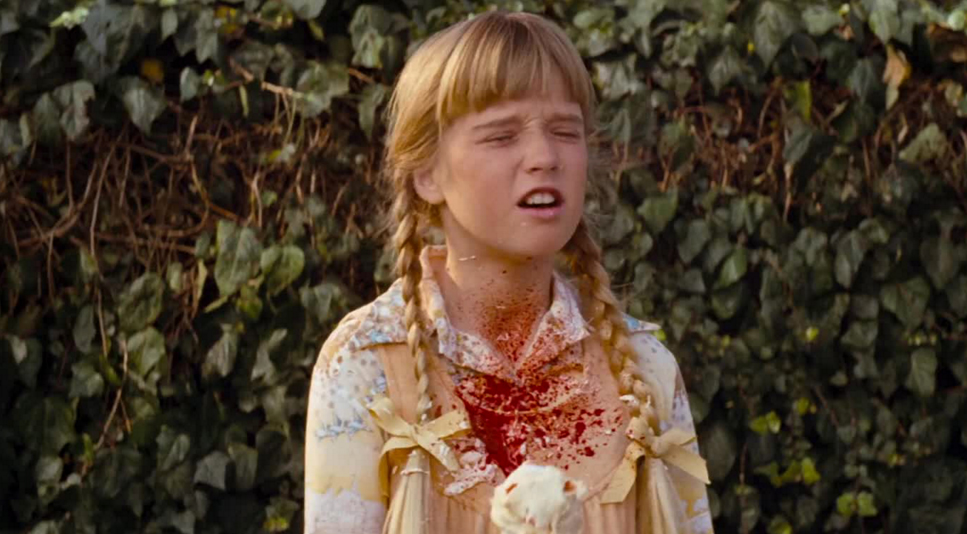
Most Carpenter moment? It’s not often that you watch a scene and think ‘there’s no way you’d get away with that now’ but the key scene in this film is just that. Our gang members begin to circle an ice cream van driver, clearly nervous that he’s being targeted for reasons unknown. Distracted by a little girl buying an ice cream, they grab and terrorise him, knocking him to the ground and killing him…but not before shooting the little girl in cold blood who’d come back to exchange her ice cream. As shocking now as it must have been in the 70s, after being confronted by a scene like that, you firmly believe that anything can happen and keeps you on your toes right until the end.


They Live (1988) – click here for full review


Based on Ray Nelson’s 1963 short story ‘8 o’clock in the Morning’ this is an incredibly clever, political satire and represents allegorical sci-fi at its best. If you haven’t seen the film then skip to the next film as there will be spoilers!

Central to the plot is the idea that aliens are among us and hiding in plain sight, occupying positions of power and influence. A drifter, wonderfully played by the late Roddy Piper, stumbles across the secret after unwittingly falling in with a small band of freedom fighters, roping in the reluctant Keith David. Carpenter manages to say a lot about society and how the working classes are kept down and oppressed by an elite who control the media through big business, politics and the uneven distribution of wealth. Whereas ‘The Thing’ was a visceral film all about claustrophobic paranoia, ‘They Live’ is a considered comment about the widespread takeover and manipulation of American society.

Carpenter’s films are renowned for their tension and economy of action but as his films progressed we began to see more humour coming on. ‘Big Trouble in Little China’ was something of a watershed film for Carpenter where we really saw more personality come through that had been hinted at in ‘Escape From New York’. ‘They Live’ gave him the opportunity to add substance to that humour for what would ultimately prove to be his last classic film. Another great score that complements Piper’s character as a drifter and one of THE great lines in cinema history, altogether now… “I’ve come here to chew bubblegum and kick ass…and I’m all out of bubblegum!”

Most ‘Carpenter’ Moment? That wonderful fight scene between Piper and David is pure gold. We know that David’s character Frank represents Piper’s last chance to show the world what’s going on so the tension is there…we want him to win the fight and know what’s at stake. But for Frank it’s a matter of principle and on the face of it we’re watching two grown men fight over a pair of sunglasses! As funny as it is tense, apparently at one point the two men were genuinely fighting which is believable as the fight takes up just under six minutes of screen time. It has a great pay off with Frank and Nada checking into a hotel room, bruised, battered with their eyes well and truly open and seriously pissed off!


The Fog (1980) – click here for full review


Carpenter’s follow up to the juggernaut that was ‘Halloween’ is a highly effective and old fashioned ghost story. It’s the kind of tale that could be told around a camp fire and Carpenter knows this, he re-shot around a third of the film, the opening scene featuring John Houseman telling children the story that would pretty much sum up the plot of ‘The Fog’ around a camp fire being one of them. It shares many similarities with ‘Halloween’; it’s low budget, it favours tension over gore, the threat is ever present but rarely seen and it features a wonderful central performance from Jamie Lee Curtis, alongside her mother Janet Leigh. Whereas there is mystery behind the motive of Myers, here we know exactly what the ghosts want but having them manifest themselves from the mysteries of the deep is what gives it that otherworldly quality.

Perhaps it’s because Carpenter was on a hiding to nothing with critics following what he did with ‘Halloween’ but, despite being a commercial success ($22million on a $1million budget) critics weren’t too kind, even Carpenter wasn’t satisfied and his displeasure with the final film was one of the reasons he agreed for it to be remade. I’ve always loved ‘The Fog’ and regard it as one of his best. It’s lean, creepy, eerie, oozing a small town urban legend vibe and utterly enthralling. The fact that the remake is so completely inept just shows what a master craftsman Carpenter is…and another pitch perfect soundtrack.

Most ‘Carpenter’ moment? An almost unbearably tense scene where radio DJ Stevie can see the fog heading towards her house where her son is being looked after by Mrs Kobritz. She sends panicked messages over the airwaves for someone to save him but can Nick and Elizabeth get there in time. All the elements are there…time is a factor, a young boy on his own in peril, the ancient mariners taking their time to break through Andy’s door and then, or course, the car gets stuck in mud just when you think they’ve made it. Carpenter’s eye for the dramatic, clever editing and incredible synthesised score come together like the ingredients of an Ice Cream Sundae to give leave us breathless and anxious for more!


What now?


Well, what are your favourites? I’m aware I’ve missed out some biggies…you might ask “What about ‘Big Trouble in Little China’, ‘Escape from New York’ or ‘Christine’?” You might want to know if I forgot ‘Prince of Darkness’, ‘Dark Star’ or ‘Starman’. You might have included ‘Ghosts of Mars’, ‘Memoirs of an Invisible Man’ or ‘Elvis’ but you’d have been wrong!

So, what films would you pick as Carpenter’s ‘Five of the Best’…I want to hear your views!

Thursday, 24 August 2017

The Legend of Boggy Creek (1972)

Tagline: “The true story of ‘The Fouke Monster’”
Duration: 85 minutes

Film Quality: 2/5
Gore Content: 0/5
Entertainment Value:3.5/5
Originality: 4/5


Introduction


Back in the early 70s, as drive in horror movies were somewhere approaching their peak, American theatres were always on the lookout for something different. In the land of opportunity, and perhaps sensing that there was a profit to be made with a small amount of money and lot of drive, one Charles B Pierce borrowed $100,000 to make a quasi-documentary about a bigfoot type creature terrorising a small Arkansas town. Using locals and students instead of actors the result is a terrible movie that has some kind of strange hold over people of a certain age who saw it at a certain time in their lives, like a piece of celluloid shrapnel lodged in our combined movie consciousness!


In a nutshell


The narrator of a ‘docudrama’ returns to his home town where he reminisces about his close encounter with ‘The Fouke Monster’, a Bigfoot type creature that legend had it roamed the nearby ‘Boggy Creek’. His narration then takes us on a journey to recount some of the significant events in the legend’s history and asks us to make up our own minds about the existence of the beast.


So what’s good about it?


Here is a film that relies almost entirely on the time and place that it was created and consumed. Back in the very early 80s, BBC2 screened this film at tea time, which meant that a number of youngsters, me included, were exposed to our first encounter with a monster movie. It didn’t matter that the film is blatantly fiction, at the age of 4 you believed what you saw on TV and very easily frightened by something that appeared different. The voiceover and documentary feel made it look more like the News rather than a film and that WAS real! Parents had no way of knowing what the content of this film would be…it was on early, there were only three TV channels at the time and there was no Internet. I was scared, had no idea why I quite enjoyed it and that conflict of hitherto unknown emotions left its mark.

This is where nostalgia plays strange games with you. I finally got to see this film again some 37 years later and it’s incredible how much of this I both remembered and misremembered. A song that I had attached to the film wasn’t in it, but there are songs which meant my memories had shifted meaning from this unfamiliar film onto something more familiar. There was one single line and scene that genuinely frightened me…a cat dies following an encounter with the monster and the narrator says “There was not a mark on it, it was literally scared to death”. I’m not sure that I knew it was a ‘documentary’ or if I’d discovered that by looking it up when the Internet came along but again, this stuck in my mind. I can now see it for what it is, a crude if honest and interesting docudrama that I clearly believed during my early years when the concept of things being made up but made to look real was alien to me.

There is a certain eeriness about the film!
Going onto the film itself, for today’s audiences it would be largely forgettable but it does have a certain something. The narrator’s dry, almost dull, monotone voice is oddly detached from the onscreen proceedings, despite apparently being made by someone personally affected by the monster. The film itself oozes nostalgia and the opening few scenes, perhaps three minutes of seemingly innocuous shots of wildlife are suddenly shattered by the eerie cries of the monster which causes them to flee and behave erratically. It certainly adds to any effect of authenticity which is soon destroyed by the human cast which is as wooden as the forests that surround Fouke.

We’re treated to some re-enactments of Fouke Monster encounters which range from quite well done to bloody awful, perhaps outstaying its welcome to a certain extent, but it surprisingly holds your interest first time around. That said, it’s clear whilst watching that there is a certain amount of padding, as if they had a good 55 minutes of footage with no idea about where to get the other 30! Again, you’re under no illusions that what you’re seeing is real but you can’t escape the notion that this is a story that, though clearly based on legend and hearsay, is one familiar to a number of those who lived in small towns and watched it on the drive in circuit. The Fouke Monster may be one of many unassuming legends, but the story is very real, alive and fully realised in every urban legend from every small town.


What about the bad?


Dear oh dear, the film really doesn’t stand up well to technical scrutiny. The acting is the kind you would expect if you asked the local residents of a small town to ‘act natural’ and play themselves whilst feeding them dialogue. The lights are on but nobody’s home! It’s as slow and meandering as the Creek from which it’s named and there is no real attempt to offer any explanation or even real evidence of its existence beyond staged re-enactments and passed on stories. It offers no resolution other than a ‘it may still be out there or it may not’ monologue which makes for a somewhat empty feeling as the end credits roll.

It does labour the point in terms of its reconstructions to the extent that they become a bit boring, however it is broken up around the half hour mark with not one but two, very odd and horrendously misjudged musical numbers! First up is a bizarre folk song that posits the theory that the monster is lonely and just needs a cuddle. It is cringe worthy to the say the least with lines such as ‘Perhaps he dimly wonders why, there is no other such as I, to touch, to love before I die, to listen to my lonely cry’…perhaps he’s waiting for The Hendersons!!!. Thankfully it’s a brief interlude until they unexpectedly crowbar in a second folk song a few minutes later that manages to be even worse!!! Called ‘Nobody Sees the Flowers but Me’, the song appears to have no significant purpose other than to introduce us to a young boy by the name of Travis Crabtree! His sole purpose in life is to ramble through the woods on his own with a gun, delivering food and supplies to an old hermit called ‘Herb’ who shot off most of his foot in a tragic boating accident!!!

Thankfully, before it veers too far off into unintentional comedy territory it does take a long hard look at itself in the mirror to give us a few good scares in the final half hour with some fairly dark and creepy moments of the monster terrorising a family at night.


Any themes?


It’s first and foremost an exploration of childhood fears and the deep rooted nature of local legends. I still remember being afraid of passing a certain pub in the small town where I grew up, I still have no idea why but even now the building creeps me out. I don’t know if it was the name of it, the motif on the sign hanging on the wall, if I was told off whilst outside, if I woke up from a nightmare whilst passing it…all I know is that I associated it with fear and that’s what this film is about. The narrator heard an animal noise and, because of the stories of monsters and the legend within the small town, that was the most logical explanation of its source.


Release History


No censorship issues, in fact the main issue for the past 40 years seems to be getting to see it at all! In the UK at least there has been no worthwhile release. It was available on VHS, bootleg or substandard DVD releases have hit the market and occasionally do the rounds on auction sites but the best way to get hold of it, in the UK at least, is on demand where it has decent but not great, pan and scanned picture quality, at least on the version I saw on Amazon.


Cultural Impact


Fake documentaries and found footage movies are ten a penny at the moment and have been for years. You can thank ‘The Blair Witch Project’ for that! There’s an argument to be had that ‘Boggy Creek’ was where it all started and, though not exactly a runaway hit that year, it has gone on to gross some $20m which some lists claim puts it in the top ten highest grossing films of that year!!!
Let’s not also forget that this is based on a real legend. There are countless Pinterest, social media sites and websites dedicated to the Fouke Monster as well as a number of piss-poor sequels or tie-ins (the most recent being ‘Boggy Creek Monster’ from 2016) which make the original look better with every viewing. It still has a cult following, largely from those who, like me, saw it as an impressionable child and it stuck with us, just like the shrill cry of the Fouke Monster stuck with the fictional documentary maker within the film.


Final thoughts


Let’s be brutally honest, this is not a ‘good’ film! Yes, it has a few effective scenes but nobody could possibly argue otherwise, however it holds a special place in my cinematic heart as my very first encounter with a low budget horror flick. You can pick holes in the acting (it’s impossible to do the opposite!), laugh at the folk songs and pour scorn on the production values but there’s something about it I can’t shake off. It doesn’t hold up to repeated viewing but I know I’ll return to it again. However, I fear that it must be watched with a heavy dose of nostalgia!


You’ll like this if you enjoyed…


‘The Blair Witch Project’, ‘The Last Broadcast’, any ‘Bigfoot’ film